You’ve described your new album, Human Grace, as revealing more of yourself than your previous work. Was there anything you found unexpectedly difficult to express through these songs, or anything that surprised you about yourself during the creative process? BarefootJax
No. It’s an exploratory process, the activity of making new music. It’s about quieting yourself, being available to hear tiny little differences in vibes, to pick up a seed that will blossom into something – and then it goes from being nothing to becoming a thing, instantaneously. That has never changed for me. With a-ha, there wasn’t much time and peace for songwriting. Being the frontman takes a lot of focus.
What has changed is my access to the skilled tools – singing and guitar – due to the Parkinson’s medication side-effects. For this album, we found old recordings of my voice, some from over 10 years back. It hasn’t been devastating for me to get this diagnosis – it has been a blunt and impactful instrument to stop everything I was doing. I had to reassemble myself first, to understand what it is. Losing access to parts of myself I’ve taken for granted all my life, but also a new appreciation for the architecture of ourselves as an organism – it’s so impressive. It’s mind-blowing.
In the early days of a-ha, you spent time living and recording in Sydenham, south London. Was it a formative, fun time for all of you? Any stories about that period? mrskite
It was tough going, but it didn’t matter to us, because we were so excited about being where we were, doing what we were doing, feeling the freedom that comes with that. But we were on the brink of needing serious intervention: we didn’t have money to sustain ourselves, and we didn’t know how long that would last.
The living quarters were on the squalid side. There were only two beds, so we had to take turns sleeping on a mattress where springs would pop out. We all had pollen allergies, especially Magne [Furuholmen] and me. There was a gas leak, and we all woke up with massive headaches. After that, we heated the room using the electric cooktop coils. We once made an attempt at painting one of the walls, but it soon developed boils that popped, with yellowish-brown goo pouring out.
Take on Me took a few attempts, and a groundbreaking video, before it became the hit it so deserved to be. What was that period like for you and the band? Did you think you’d make it or did you get the sinking feeling that you’d never quite break through? 11LFO11
I never doubted it – that was my touch of naivety. The other guys did, but I didn’t accept it, although they probably had a better understanding of reality and what was likely to happen than I did.
Since the first time I saw them, live at a gig, it hit me: I knew they needed me, to be complete, I didn’t have any doubt. I just saw them, and I knew. A crazy, gracious feeling, not egotistical. I’d discovered them, and I knew they just had to discover me.
a-ha: The Movie [in 2021] made it seem as if being in the band was not much fun for any of you – until you were suddenly playing the incredible unplugged version of Take on Me. Was that actually the case? RalfyJ
Yes and no. We had exhausted parts of ourselves, and had too limited access to each other, and ourselves, as a result. We knew what the potential was between us, but we couldn’t access it because playfulness recedes when you don’t communicate. There were also rewarding moments, and I’ve always enjoyed touring, but in itself that’s nowhere near enough.
Paul McCartney says that when he writes, he still mentally asks John Lennon for advice about whatever he’s working on. When you’re writing songs, do you have an imaginary Paul [Waaktaar-Savoy] and Mags sitting on each shoulder? TommyG33
No. But maybe the other way around – I think they’ve both written songs with my voice in mind.
You support Stoke City? How the hell did that happen? laithaljan
Bit of a stretch, really, that was said half as a joke. It’s mostly my younger brother who was an avid fan. We shared a room as kids, and it was plastered with his posters of Stoke City players. My own posters were of butterflies.
I remember being impressed as a kid with an interview you gave to (I think) Smash Hits, in which you said that if you hadn’t been a singer, you would have been a priest. Is that true? catmoderm
I knew it was not for me to be ordained as a priest, that kind of service, but I’ve been very interested in discussing faith with people who, according to them, have no faith. But I don’t want to do that with a Bible in my hand. I was curious as to whether I could find a language to talk about faith, theology, religion – which are all different things.
I’ve always been very curious – that’s the core aspect of me, and it has led me to go on searches, trips inside myself, and towards philosophical concepts and systems. I’ve always wanted to know what lies behind anything; even as a kid I had to investigate how things looked underneath and inside. Lately I’ve been fascinated by the profound work of [British psychiatrist] Iain McGilchrist, on the different roles of our two brain hemispheres.
After recording The Living Daylights, did you ever get to meet James Bond? Girlyouknowitstrue
Who is he again? I’ve yet to even meet myself, and I’m fucking real.
I was wondering how the idea came about to have two of your daughters participate in your new album, and why you decided to do so? Virginie91
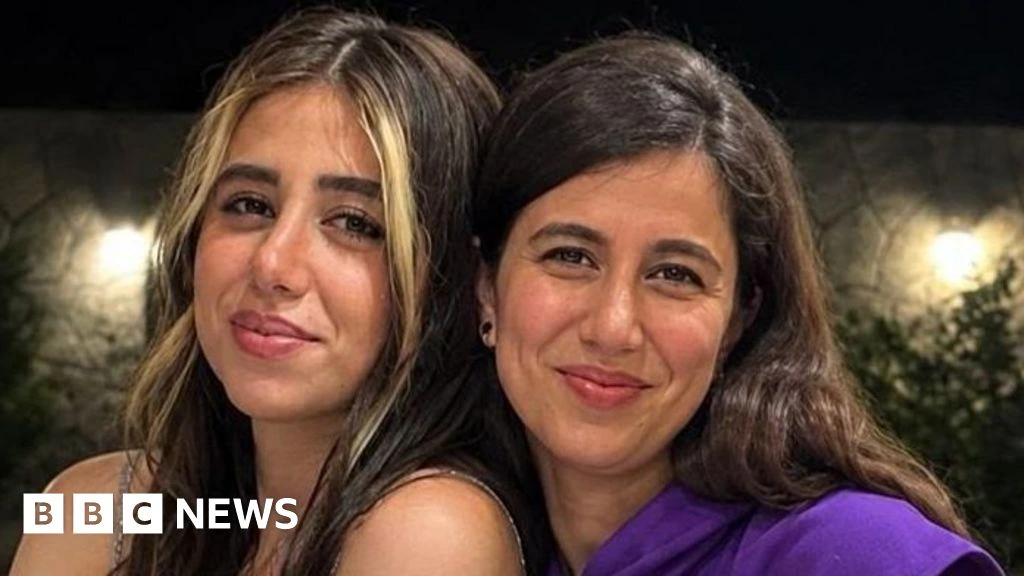
It wasn’t planned. We knew from the outset that two songs were lacking something; they needed either me singing some bits, or someone else. There were voids. We started thinking of who it could be, and someone came up with the idea of my daughters, maybe [manager] Harald [Wiik], maybe me.
When it came up, I thought: are they prepared to be part of something that could bring attention, that could impact their lives for a period? Tomine is well acquainted with media and public appearances, but I had more concern for Karmen, although she’s very active with music and theatre, and is part of a band. They are very strong singers. I never tutored them at all: they’re completely self-taught, they just listened in the background to what I did with my voice. It took no time at all, in and out of the studio. It was fun, being there and hearing them, how precise they are. The timing and phrasing is excellent. And this isn’t even really their kind of music.
With the 1980s having another revival via gen Z, who feel nostalgia for a time they never knew, what do you think today’s young people are searching for? Apart from our fabulous hair? Christine_Rousseau
Gen Z are searching for leadership they can believe in, but for themselves they’re looking for human relations, belonging, and finding that lacking today. For the last 15 to 20 years, the leaders of the world have been asking the youth for advice, and that may look good on the surface, but it should set off alarm bells, because it means they don’t really know. Our civilisation has been in the process of undoing itself for quite some time, due to negligence and lack of responsibility.
In life, the moment you become aware of something that is not OK, you’re immediately responsible for it. It’s no different from driving past a car accident: you need to stop, you remain 100% responsible and accountable.
I remember reading in a magazine in the late 80s that Paul wore denim underwear. Was that true? Onionfever
I’ve never looked at his underwear. It simply doesn’t interest me.
Through all the different versions of yourself that life has brought about, what is the one thing you feel has remained fundamentally unchanged about you? And what, if anything, have you had to let go of along the way? velvetroads
I suppose I would say my heart. I possess a kind of … naivety, at the base of my system, that is linked to the purity of the essential emotional being, and that influences all the things that I’m doing.
There’s only ever been one big change for me: fame. From being an actual member of society, to having that revoked when instant fame hit me. It’s a colossal change, a profound personal loss, surpassed only by that of losing a loved one. I hate fame, but I love people, and the potential in us. But I don’t like people, or the human race, very much, because we keep on making the same primitive mistakes, and in the end you lose patience for that. But I love the potential of what we can do, that spark in people, young or old. That moves me a lot.