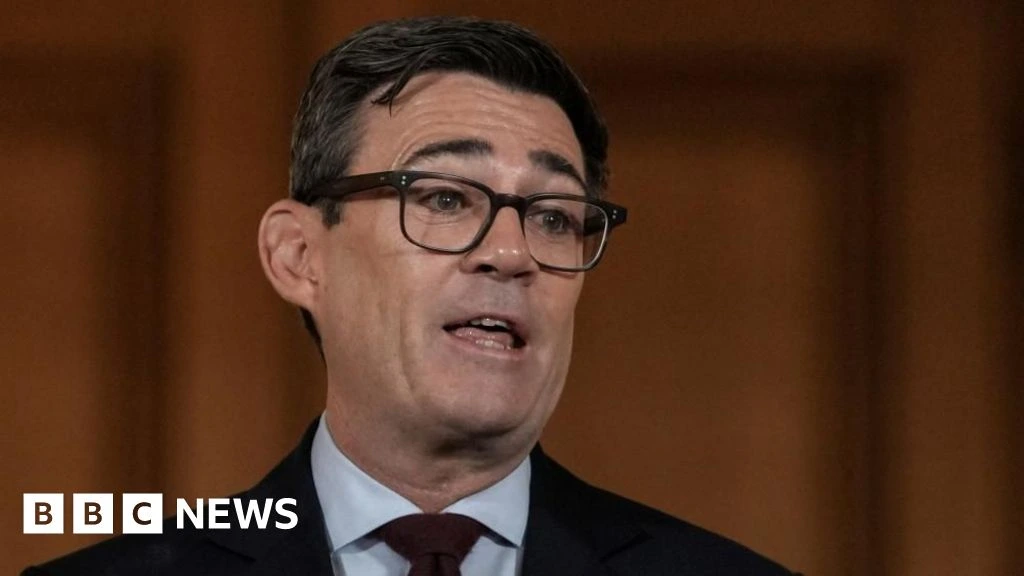
Prime Minister Andy Burnham says he is "open" to the possibility of the UK formally apologising for its role in the transatlantic slave trade, but has ruled out financial reparations.
Prime Minister Andy Burnham says he is "open" to the possibility of the UK formally apologising for its role in the transatlantic slave trade, but has ruled out financial reparations.
He said he wanted a "dialogue with those affected" and was open to "calls for an apology", but said reparations were "not the right answer".
He said he wanted a "dialogue with those affected" and was open to "calls for an apology", but said reparations were "not the right answer".
The statement was welcomed by the All-Party Parliamentary Group (APPG) for Afrikan Reparations, with its chairwoman Bell Ribeiro-Adday telling BBC Radio 4's Today programme the issue was not just about money.
The statement was welcomed by the All-Party Parliamentary Group (APPG) for Afrikan Reparations, with its chairwoman Bell Ribeiro-Adday telling BBC Radio 4's Today programme the issue was not just about money.
It comes ahead of next week's Commonwealth leaders summit in the Caribbean. As King Charles III tours the region, there have been renewed calls for an apology.
It comes ahead of next week's Commonwealth leaders summit in the Caribbean. As King Charles III tours the region, there have been renewed calls for an apology.
King Charles III tours the regionDuring the first leg of his tour in the Bahamas, the King made reference to the "suffering of the past". Later, in Guyana, he visited the site of a rebellion of enslaved people against British authorities.
During the first leg of his tour in the Bahamas, the King made reference to the "suffering of the past". Later, in Guyana, he visited the site of a rebellion of enslaved people against British authorities.
On Saturday, Burnham described the transatlantic slave trade, when Africans were trafficked to the Americas, as a "brutal and barbaric violation" and said Britain must "face up to the past".
On Saturday, Burnham described the transatlantic slave trade, when Africans were trafficked to the Americas, as a "brutal and barbaric violation" and said Britain must "face up to the past".
The British government has never formally apologised for slavery or offered to pay reparations. Burnham has stuck with the policy of his predecessors, and has stopped short of offering any consideration of reparation payments.
The British government has never formally apologised for slavery or offered to pay reparations. Burnham has stuck with the policy of his predecessors, and has stopped short of offering any consideration of reparation payments.
"I do not think that British people today can be held liable for historical wrongs, however heinous, that happened in a different age under different laws and in which they played no personal part," Burnham wrote in a piece for the Guardian.
"I do not think that British people today can be held liable for historical wrongs, however heinous, that happened in a different age under different laws and in which they played no personal part," Burnham wrote in a piece for the Guardian.
piece for the GuardianHe said Commonwealth countries had for years been asking for an "honest conversation".
He said Commonwealth countries had for years been asking for an "honest conversation".
He said he wanted to offer a "structured dialogue", adding: "Listening to calls for a formal apology on behalf of the British state will form an important part of this process. I am open to them."
He said he wanted to offer a "structured dialogue", adding: "Listening to calls for a formal apology on behalf of the British state will form an important part of this process. I am open to them."
Chancellor John Healey told the BBC that Burnham was "open to a discussion" about an apology because it was "the right thing, particularly ahead of the Commonwealth heads conference".
Chancellor John Healey told the BBC that Burnham was "open to a discussion" about an apology because it was "the right thing, particularly ahead of the Commonwealth heads conference".
The Commonwealth Heads of Government Meeting starts on 1 November in Antigua, and will be opened by the King as part of his tour.
The Commonwealth Heads of Government Meeting starts on 1 November in Antigua, and will be opened by the King as part of his tour.
Speaking to Laura Kuenssberg, Healey said the prime minister does not think reparations are the right approach.
Speaking to Laura Kuenssberg, Healey said the prime minister does not think reparations are the right approach.
He added that a formal apology doesn't mean British people should now "accept the financial liability for any part in things that happened hundreds of years ago in which they had no role".
He added that a formal apology doesn't mean British people should now "accept the financial liability for any part in things that happened hundreds of years ago in which they had no role".
Conservative leader Kemi Badenoch said there was "no reason British taxpayers today should be held financially responsible for things that happened generations before any of us were born."
Conservative leader Kemi Badenoch said there was "no reason British taxpayers today should be held financially responsible for things that happened generations before any of us were born."
In a post on X, Badenoch wrote that Labour was "already spending too much on Britain's welfare state, now is not the time for Andy Burnham to be providing global welfare."
In a post on X, Badenoch wrote that Labour was "already spending too much on Britain's welfare state, now is not the time for Andy Burnham to be providing global welfare."
Liberal Democrat leader Ed Davey said: "I do think we have a duty there and saying sorry is always quite a good thing."
Liberal Democrat leader Ed Davey said: "I do think we have a duty there and saying sorry is always quite a good thing."
Bell Ribeiro-Addy said that while her parliamentary group welcomed the government's acceptance of the role it played, it had "still fallen short of a formal state apology and that actually costs nothing".
Bell Ribeiro-Addy said that while her parliamentary group welcomed the government's acceptance of the role it played, it had "still fallen short of a formal state apology and that actually costs nothing".
"Acknowledgement is not the same as understanding," she told Today, adding: "Until we apologise, we are never going to be on equal footing… it's meant to be a family of nations - a Commonwealth - and it's simply not the case."
"Acknowledgement is not the same as understanding," she told Today, adding: "Until we apologise, we are never going to be on equal footing… it's meant to be a family of nations - a Commonwealth - and it's simply not the case."
Ribeiro-Addy, who is MP for Clapham and Brixton Hill, said that, to her knowledge, an invoice for financial reparations has not been given to the UK, and so discussing "reparative justice" on those ends, was missing the point.
Ribeiro-Addy, who is MP for Clapham and Brixton Hill, said that, to her knowledge, an invoice for financial reparations has not been given to the UK, and so discussing "reparative justice" on those ends, was missing the point.
"My worry is the focus on financial reparations, and I think that is deeply problematic and has not quite listened to what people have said," Ribeiro-Addy said.
"My worry is the focus on financial reparations, and I think that is deeply problematic and has not quite listened to what people have said," Ribeiro-Addy said.
Downing Street believes it is in the UK's interest to strengthen the Commonwealth, in a world where China and Russia are seeking to exert influence.
Downing Street believes it is in the UK's interest to strengthen the Commonwealth, in a world where China and Russia are seeking to exert influence.
Only this week, President Vladimir Putin hosted a Russia-Africa summit in Moscow.
Only this week, President Vladimir Putin hosted a Russia-Africa summit in Moscow.
Barbados Prime Minister Mia Mottley, who has sought reparations, welcomed Burnham's statement, saying she would engage in good faith while still seeking reparatory justice.
Barbados Prime Minister Mia Mottley, who has sought reparations, welcomed Burnham's statement, saying she would engage in good faith while still seeking reparatory justice.
Denis O'Brien, founder of The Repair Campaign, said Burnham's statement was disappointing and did not go far enough.
Denis O'Brien, founder of The Repair Campaign, said Burnham's statement was disappointing and did not go far enough.
"The British government must stop obfuscating and give a full and formal apology now," he said.
"The British government must stop obfuscating and give a full and formal apology now," he said.
"This would be a significant and symbolic first step towards reparatory justice."
"This would be a significant and symbolic first step towards reparatory justice."
From the 16th Century, English authorities and the monarchy were prominent participants in the centuries-long slave trade.
From the 16th Century, English authorities and the monarchy were prominent participants in the centuries-long slave trade.
Burnham is not first UK prime minister to address the issue.
Burnham is not first UK prime minister to address the issue.
In 2007, the then PM Tony Blair said the UK's role in the slave trade was a matter of "deep sorrow and regret".
In 2007, the then PM Tony Blair said the UK's role in the slave trade was a matter of "deep sorrow and regret".
said the UK's role in the slave trade was a matter of "deep sorrow and regret".David Cameron ruled out making reparations for Britain's role in the historic slave trade in 2015, urging Caribbean countries to "move on" during a visit to Jamaica.
David Cameron ruled out making reparations for Britain's role in the historic slave trade in 2015, urging Caribbean countries to "move on" during a visit to Jamaica.
urging Caribbean countries to "move on" during a visit to Jamaica.Rishi Sunak dismissed a call for the government to apologise and pay reparations for the UK's historical role in slavery in 2023 after Bell Ribeiro-Addy asked if he would make a "full and meaningful apology" and "commit to reparatory justice".
Rishi Sunak dismissed a call for the government to apologise and pay reparations for the UK's historical role in slavery in 2023 after Bell Ribeiro-Addy asked if he would make a "full and meaningful apology" and "commit to reparatory justice".
dismissed a call for the government to apologise and pay reparations for the UK's historical role in slaverySunak replied with a "no", and said: "Trying to unpick our history is not the right way forward."
Sunak replied with a "no", and said: "Trying to unpick our history is not the right way forward."
In 2024, Sir Keir Starmer ruled out compensation for the UK's historical role in the slave trade.
In 2024, Sir Keir Starmer ruled out compensation for the UK's historical role in the slave trade.
ruled out compensation for the UK's historical role in the slave trade.At the time, he said he wanted to focus on the future of the Commonwealth.
At the time, he said he wanted to focus on the future of the Commonwealth.
Britain had a key role in ending the trade, through Parliament's passage of a law to abolish slavery in 1833.
Britain had a key role in ending the trade, through Parliament's passage of a law to abolish slavery in 1833.
As part of that law, British plantation owners were paid for the loss of people they had enslaved.
As part of that law, British plantation owners were paid for the loss of people they had enslaved.
The UK only finished paying off the debt it incurred to cover the payments in 2015.
The UK only finished paying off the debt it incurred to cover the payments in 2015.