‘There’s nothing wrong with having a hobby, or even what you might call in this case a hyperfocus,” psychiatrist Dr Godrick tells Eleanor Glanville in a claustrophobic therapy room.
Outside the Phoenix theatre in Hampshire, a summer heatwave is delivering perfect conditions for butterflies. Inside, a rather darker story is being rehearsed in air-conditioned gloom. Butterfly, a new play, shines a light on one woman’s passion for butterflies and how it is turned against her when she became trapped in an abusive relationship.
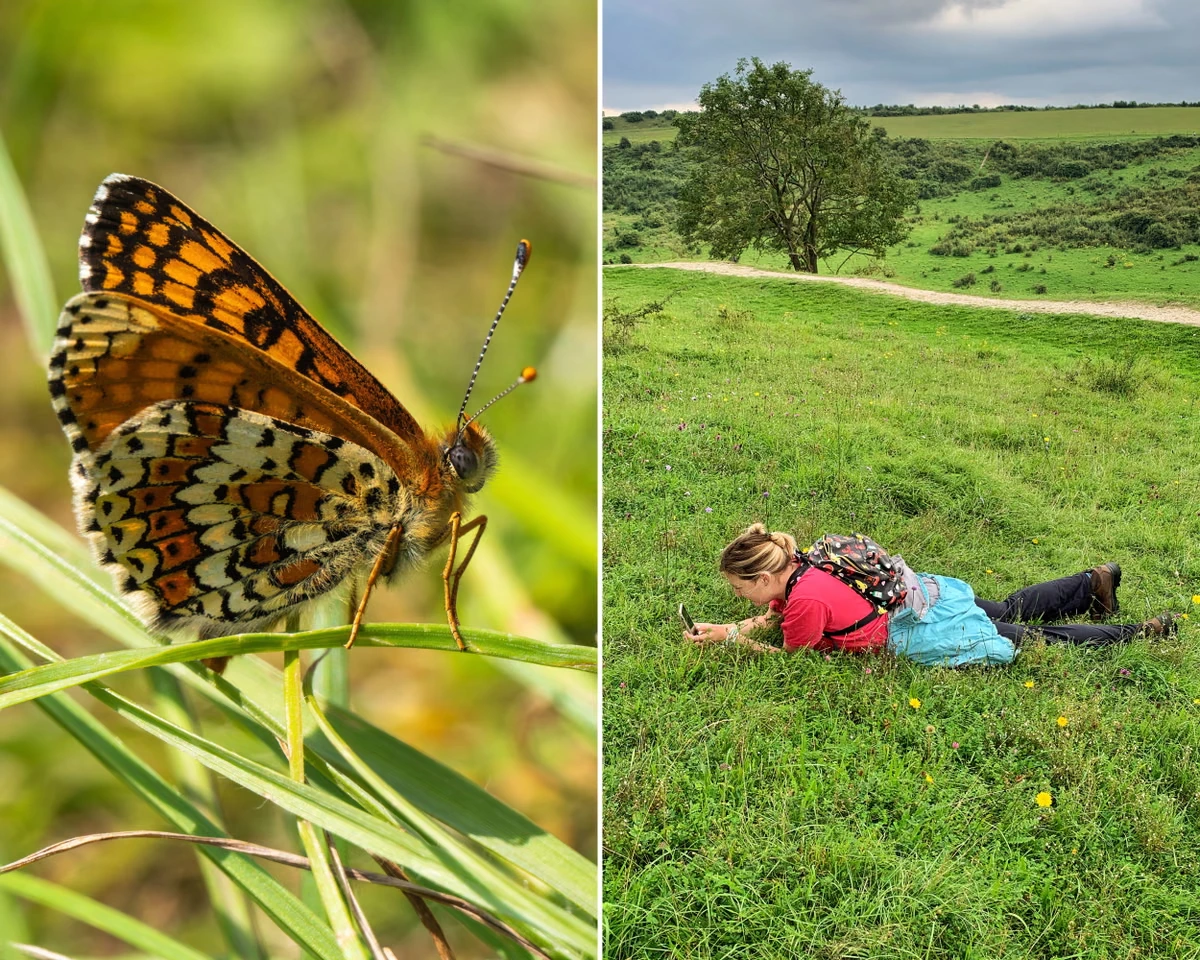
The play is based on the life of Eleanor Glanville, one of Britain’s pioneering female naturalists and the only real person whose surname endures as the common name of a British butterfly, the Glanville fritillary, a rare species she discovered at the end of the 17th century. Tragically, Eleanor endured a violent, money-grabbing second husband, who snatched her estate and fortune after her will was overturned in court because a judge concluded she was “deprived of her senses” for roaming the countryside in pursuit of rare butterflies.
We may hope such cruel patriarchy belongs to less enlightened times but writer, artist and butterfly obsessive Claire Jackson has smartly shifted Eleanor’s story to the present day, translating 17th-century male abuse to the 21st-century manosphere with troubling ease.
In a witty, tense two-hander, Eleanor’s love of finding rare butterflies – “something that makes my pulse quicken” – is an escape from her unpleasant spouse Richard. Eleanor sees the (equally troubled) psychiatrist reluctantly, only because her lawyer suggests a clean bill of mental health will assist her approaching, acrimonious divorce.
After a deft portrayal of the pleasures and perils of hunting for rare butterflies, which captures its charm and eccentricity, we see how Eleanor’s passion is manipulated as she is gaslit, belittled and shamed on social media by Richard, who is all the more ominous for never appearing on stage.
Jackson was developing the play – commissioned by Phoenix’s new writing programme, which spotlights overlooked voices – when she saw an opera, The Women of Whitechapel, which is about Jack the Ripper and yet Jack never appears. “I thought that was very clever – it made the story far more impactful so I took inspiration from it,” she says, also citing Alan Bennett as her “God” for his sparky dialogue.
Like many people, Jackson fell in love with butterflies when she was a child. She reconnected with them when she moved to the countryside and took up walking after struggling with depression and being diagnosed with bipolar disorder. “Each walk was elevated by a butterfly sighting – eventually, the walks revolved around the butterflies,” she says.
Although Butterfly Conservation can point to 49% female membership, Jackson has experienced some sexist or patronising attitudes from male obsessives when she’s “butterflying” and thinks “there is still work to be done” to tackle sexism in some butterfly communities. She’s never felt unsafe in the woods but recognises that rational fear remains a barrier to some women enjoying solo butterfly-seeking. “It’s unusual to see women wandering around the woods on their own, and that’s because there are, unfortunately, still issues of safety. There’s some lovely memes of men who are out on hikes who let women know they’re no threat by saying things such as: ‘Oh, hi, I’ve got a lovely husband!’”
In four acts that correspond to a butterfly’s life-cycle – egg, caterpillar, chrysalis and butterfly – we see the tragic unfolding of Eleanor’s life.
Sally McIlhone, who plays Eleanor, is full of praise for Jackson’s monologues, which vividly convey the uncertainty of being gaslit. “Someone’s telling you: ‘You are this thing.’ And you’re like: ‘But no, I’m not that, because I’m this.’ And they’re like: ‘No, no, no, this is who you are.’ And you’re like: ‘Am I?’” she says. “And if you’re a conscientious person who is empathetic, that can be manipulated.”
Jackson hopes her portrayal of Eleanor’s possible neurodiversity and questioned sanity holds nuance and ambiguity – but everyone in the audience will surely be cheering Eleanor’s clear grasp of both reality and the innate joyfulness of her chosen passion, just as the troubled psychiatrist (played by Elizabeth Blake) belatedly recognises it too.
What would the real Eleanor make of her stage debut? “I hope she would be pleased, of course,” says Jackson. “She’s a good example to us of perseverance and not listening to what other people are saying about you.”
“It would be lovely if she was watching from up there and cheering us on,” adds McIlhone. “OK, she may have lost the battle, but she won the war. I almost think material things such as her estate don’t necessarily matter to her. It’s her butterfly legacy that was most important. So if that endures, then Eleanor endures.”